A disposable e-cigarette may look simple: a small casing, a mouthpiece, and a charging or airflow design. Its safety is harder to judge. So, how are disposable e cigarettes tested for quality and safety? A careful assessment examines the device’s materials, liquid composition, electrical performance, leakage, and aerosol under repeatable conditions. Testing can also check whether nicotine delivery and labeled contents remain consistent across samples. One passing unit is not enough. Variation matters.
Dr. Brian King, director of the FDA’s Center for Tobacco Products, is a relevant public-health expert on tobacco-product oversight. Rather than present an unverified quotation as his exact words, this introduction paraphrases the core principle behind that work: evaluate evidence about the product, not the claims on its package. That distinction is practical. A lab may inspect a liquid sample, operate a device through repeated draws, and measure substances in the resulting aerosol. Yet results depend on the method, the sample size, and the conditions used. Small details count.
This guide explains the main checks, what they can reveal, and where their limits remain. Quality testing can identify defects or inconsistencies; it cannot prove that using a product is risk-free. That caveat deserves space, even if it makes the story less tidy. Consumers should look for clear test methods, traceable results, and plain explanations of uncertainty—not just a reassuring badge.
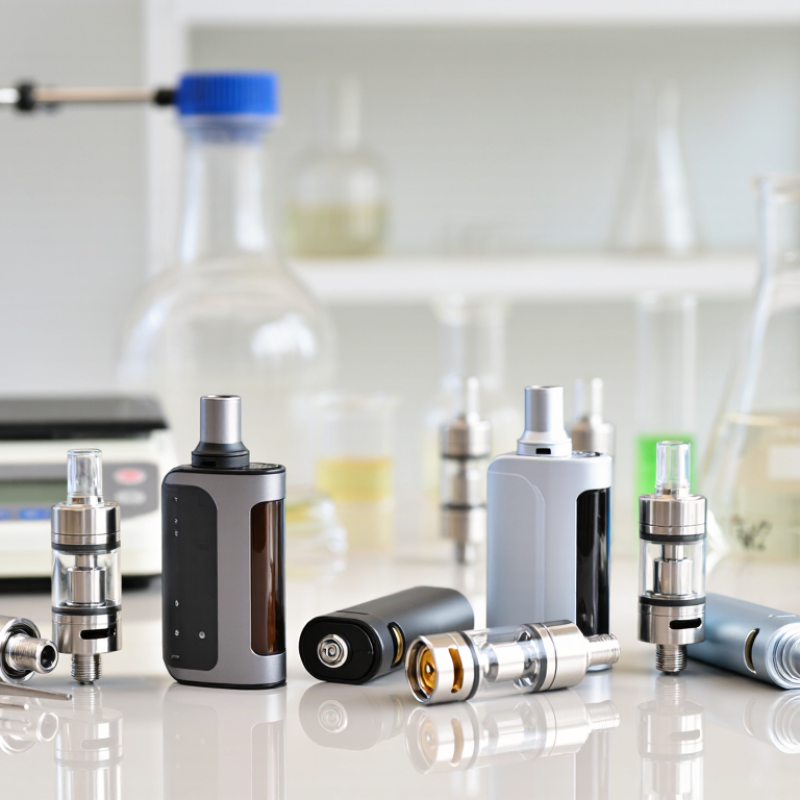
Disposable e-cigarette safety begins with product design, not final inspection. Engineers assess the heating coil, reservoir, seals, battery, and airflow path as one system. A loose seal can cause leakage onto skin or electronics. An oversized heating element may raise aerosol temperature and alter chemical output.
Material selection requires documented evidence. Stainless steel, polymers, elastomers, adhesives, and wick fibers should have supplier specifications, batch records, and extractables testing. Laboratories can examine metals and volatile compounds in generated aerosol.
The National Academies’ 2018 report found substantial evidence that e-cigarette aerosols contain potentially toxic substances, although levels vary by device and operating conditions. That variation matters.
Testing must reflect real use.
A responsible assessment includes repeated puff cycles, dry-puff detection, drop testing, overheating checks, and storage at high and low temperatures. The U.S. FDA’s 2023 premarket guidance emphasizes component characterization, manufacturing controls, and aerosol chemistry. Independent laboratories should verify results using calibrated instruments and documented methods, such as relevant CORESTA procedures. Traceability is essential: each result should connect to a sample, production lot, test condition, and analyst.
Some designs still expose uncertainty. Flavoring ingredients may be acceptable for ingestion but unsuitable for inhalation. A material can pass a basic migration test yet behave differently after months of heat exposure. More long-term data is needed, especially for aging seals and repeated battery stress. Good quality work admits those gaps instead of hiding them.
The coil, reservoir, seals, battery, and airflow work together. A loose seal may leak, while an oversized heater can change aerosol temperature and chemistry.
Suppliers should provide specifications and batch records. Laboratory testing can examine metals and volatile compounds in the aerosol. Some uncertainty remains.
Devices can undergo repeated puff cycles, overheating checks, drop tests, and temperature storage tests. A single successful activation proves little.
Calibrated instruments track voltage, current, and temperature. Technicians look for unstable output, scorching, casing damage, and uneven heating.
Inspectors test seams and seals in different orientations, then look for moisture near openings. A dry exterior does not prove every internal joint is sound.
Machines mimic repeated puffs and measure vapor volume, draw resistance, heating time, and temperature. Performance should remain stable over many cycles.
Laboratories collect aerosol samples and analyze them with validated methods. Results show whether delivery stays near the labeled amount, but variation can occur.
Battery output, liquid volume, coil resistance, and activation response may vary. Small differences can affect vapor density or nicotine exposure.
Small sample sizes and unrealistic storage conditions can hide faults. Heat, cold, aging seals, and repeated battery stress may reveal problems later.
This article explains how are disposable e cigarettes tested for quality and safety through a structured review of their design, materials, and manufacturing performance. Initial assessments examine whether the device body, mouthpiece, internal components, and packaging are made from suitable materials and assembled consistently. Battery safety, heating-system reliability, temperature control, and leak resistance are also evaluated to reduce the risk of overheating, malfunction, or liquid leakage during normal use.
Further testing focuses on e-liquid composition, ingredient accuracy, and screening for unwanted contaminants. Vapor output, nicotine delivery, flavor consistency, and performance across repeated uses are measured to confirm that devices operate as intended. Quality checks also compare units from the same production batch to identify variations. Finally, packaging and labeling are reviewed for clear instructions, ingredient information, warnings, storage guidance, and traceability. Together, these procedures help verify product consistency, user information, and compliance with applicable safety and regulatory requirements.

 Kizz Vape