Top Challenges Vape Brands Face in Global Markets

Time:2026-10-09 Author:Henry
0%

Entering global vape markets is not simply a distribution exercise. Brands meet different product rules, tax structures, and consumer expectations at every border. So, what challenges do vape brands face in global markets? The answer often begins with compliance, not advertising. A device accepted in one country may require different labeling, testing, or sales controls elsewhere. Even a small packaging error can delay a shipment or trigger a costly recall. Details matter.

Experienced teams build market plans around verified regulatory sources, qualified laboratories, and local legal advice. They check ingredient records, battery safety data, age-verification systems, and marketing claims before launch. They also monitor changing guidance, because public-health policies can shift faster than product cycles. A translated label is not always culturally or legally accurate. Neither is a familiar flavor name. This is where assumptions fail.

Global competition adds pressure. Brands must protect consistent quality across factories, freight routes, and retail partners. They need traceable batches, responsive complaint handling, and evidence-based sustainability statements. Local distributors may offer reach, yet weak oversight can damage trust within days. No plan is perfect. A thoughtful strategy admits uncertainty, tests its limits, and improves through documented results. This introduction examines the operational, regulatory, commercial, and reputational obstacles shaping responsible expansion.
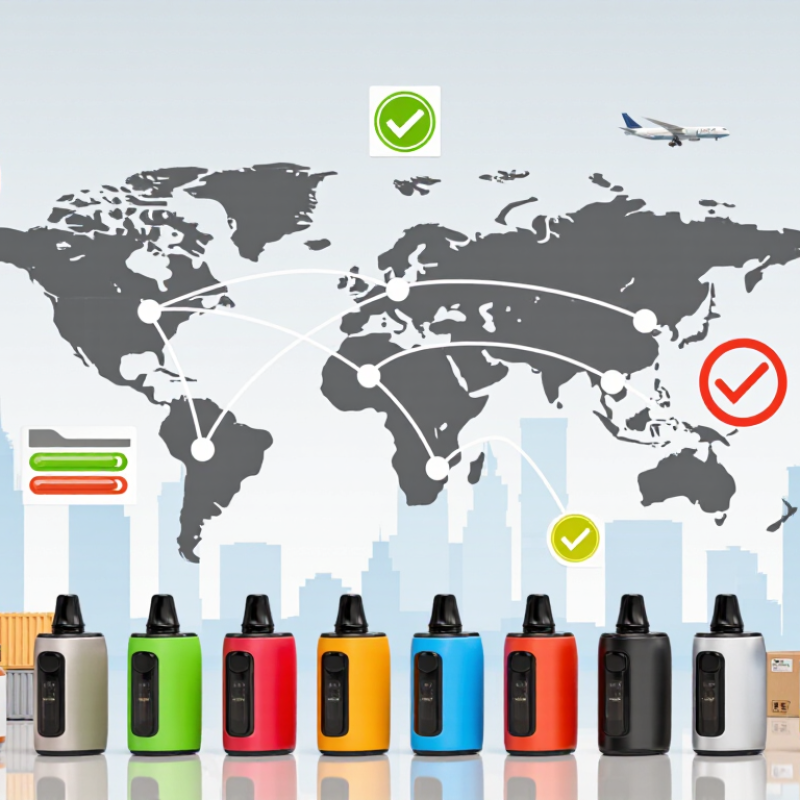
Top Challenges Vape Brands Face in Global Markets

Regulatory Differences Across International Vape Markets

Regulatory differences are among the hardest challenges for vape businesses entering global markets. The World Health Organization reported in 2023 that 88 countries had no minimum purchase age for e-cigarettes, while 74 countries had no specific regulation. This uneven landscape creates sharp differences in product design, advertising, packaging, and retail controls.

In the European Union, Directive 2014/40/EU limits nicotine strength to 20 mg/ml and refill containers to 10 ml. It also requires health warnings and product notifications. The United Kingdom uses a separate notification system through the Medicines and Healthcare products Regulatory Agency. In the United States, manufacturers generally need authorization through the Food and Drug Administration’s premarket tobacco application process. One market may accept a product filing, while another may require new laboratory evidence.

Compliance teams must therefore map each jurisdiction before shipping a single unit. They should check ingredients, emissions testing, child-resistant packaging, language rules, and online sales restrictions. The Global State of Tobacco Harm Reduction’s 2024 report also shows that national access and regulation remain highly inconsistent. That inconsistency increases costs. It can also delay launches by months.

Data alone cannot solve every decision. Some rules remain unclear or change quickly. Companies may need local legal review, not only a central compliance checklist. Even experienced teams can miss a small labeling difference. That is where practical caution matters.

Product Standards, Safety Rules, and Compliance Requirements

Top Challenges Vape Brands Face in Global Markets

Product standards and safety rules vary sharply across borders. The World Health Organization reported in its 2023 global tobacco control report that 74 countries had no regulation for electronic nicotine delivery systems. This creates uncertainty for manufacturers, importers, and retailers. A device accepted in one market may need different labeling, testing, or packaging elsewhere.

Compliance starts with evidence. Companies should maintain batch records, supplier declarations, laboratory certificates, and traceable ingredient documentation. ISO 20714 provides methods for testing e-liquids, while ISO 20768 supports routine aerosol-generation testing. These standards do not replace national law. They provide a technical baseline.

Products may also require child-resistant packaging, emissions testing, electrical safety checks, and clear health warnings. Small details matter, such as label language, font size, recycling symbols, and nicotine measurements.

The difficult part is consistency. The European Commission’s Safety Gate reports regularly show that chemical, labeling, and electrical risks remain common product-safety concerns across consumer goods. Vape compliance teams therefore need market-specific reviews, not one global checklist.

A missing supplier certificate can delay customs clearance. An unclear warning can trigger a recall. The weak point is often record control, not product design.

Some teams also rely too heavily on laboratory results. That is risky. Testing only reflects the submitted sample, while real-world production can vary. Independent audits, retained samples, and periodic retesting make the compliance file more credible. Mistakes still happen. The process must allow correction.

Cultural Preferences and Consumer Behavior in Global Regions

Cultural preferences shape vaping markets more than a universal product formula. The World Health Organization estimated 82 million e-cigarette users worldwide in 2021. However, that figure hides major regional differences. In the European Union, the 2023 Eurobarometer reported that about 3% of respondents currently used e-cigarettes. Daily use was lower. Market teams should study local routines, not just population size.

Taste expectations vary sharply. Some consumers prefer restrained flavors and compact devices. Others respond to bold flavors, colorful designs, or longer battery life. Price also carries different meanings. In lower-income regions, refill efficiency may matter more than premium presentation. In mature markets, consumers may examine ingredient information, recycling options, and age-verification standards before purchase. Small details matter. A menu, warning label, or retail display can feel unfamiliar.

Consumer history is equally important. ASH’s Smokefree GB 2024 report estimated 5.6 million adults vaped in Great Britain, with most identified as current or former smokers. That pattern may not transfer to markets where vaping is newer or less socially accepted. Research teams should test language, flavor descriptions, and usage occasions locally. Our own segmentation can become too neat. People change preferences quickly, especially when household budgets tighten. Responsible communication must avoid medical promises, respect local rules, and never target minors.

Supply Chain, Distribution, and Cross-Border Logistics Challenges

Global vape brands face complex supply chain pressures when entering regulated markets. Products must match local ingredient rules, labeling standards, packaging requirements, and age-control expectations. A shipment can leave a factory on time yet remain delayed at customs. One missing document may hold cartons for weeks.

Cross-border logistics adds further uncertainty. Batteries require careful transport planning, while temperature-sensitive components need suitable storage. Distributors also expect accurate forecasts, stable inventory, and clear product data. However, demand estimates often fail during seasonal changes or regulatory updates. Manual checks create another weakness. A small serial-number error can interrupt warehouse release and damage retailer confidence. Reliable operators use documented procedures, shipment tracking, compliance reviews, and trained local partners.

Tips: Build a country-by-country compliance file before shipping. Confirm tariff codes, customs documents, battery rules, and labeling details with qualified professionals. Keep safety stock near major distribution points, but avoid excessive inventory. Test one route before expanding. Review delivery performance monthly, and record every delay honestly. Perfect planning is unrealistic. Continuous correction is more credible.

Top Challenges Vape Brands Face in Global Markets

Supply chain, distribution, and cross-border logistics disruption indicators

Disruptions in major maritime corridors can increase transit times, freight costs, inventory requirements, and customs-planning complexity for internationally distributed vape products. The largest measured change in this comparison was the 256% increase in Shanghai–Europe spot freight rates between October 2023 and February 2024.

Source: UN Trade and Development (UNCTAD), “Review of Maritime Transport 2024” and Red Sea/Panama Canal shipping updates. Figures represent reported changes during the stated periods and are not company or brand data.

Brand Trust, Marketing Restrictions, and Market Competition

Top Challenges Vape Brands Face in Global Markets

Brand trust is difficult to earn and easy to lose. Buyers notice unclear ingredients, inconsistent packaging, and exaggerated product claims. Experienced market teams now treat transparency as an operating process, not a slogan. They publish accessible testing information and maintain responsive customer support. Independent laboratories can strengthen credibility when results remain current and easy to verify. Still, no system is flawless. A delayed complaint can expose weaknesses in training, documentation, or supply-chain oversight.

Marketing restrictions create another serious challenge. Rules differ across countries, regions, and sometimes individual platforms. Content that appears acceptable in one market may be rejected elsewhere. Responsible teams use age-gated channels, neutral product information, and careful review procedures. They avoid health promises, lifestyle pressure, and messaging that could appeal to minors. Compliance should involve legal specialists and local advisers. Even then, interpretation can be uncertain. That uncertainty demands regular audits, clear approval records, and quick correction when guidance changes.

Market competition adds constant pressure. Price cuts may attract attention, but they can weaken perceived quality and long-term trust. Competing effectively requires reliable products, accurate descriptions, and service that solves practical problems. Retail staff need evidence-based training, not memorized sales scripts. Customer feedback should influence packaging, instructions, and support policies. A crowded market rewards consistency more than noise. However, many businesses still measure visibility better than trust, which may be a costly blind spot.

FAQS

Why do consumer preferences differ across global regions?

Local routines, income levels, social attitudes, and product familiarity shape purchasing decisions. One formula rarely works everywhere.

What product features may matter in different markets?

Some consumers prefer compact devices and restrained flavors. Others value bold tastes, colorful designs, or longer battery life. Preferences can shift quickly.

How does price influence purchasing behavior?

In lower-income regions, refill efficiency may matter more than premium packaging. In mature markets, buyers may inspect ingredients, recycling options, and age controls.

Why should companies test local language and flavor descriptions?

Familiar words can change product understanding. A flavor name that sounds appealing in one region may seem confusing elsewhere.

Are vaping consumers similar in every country?

No. Some markets include many current or former smokers. Newer markets may show different usage patterns and lower social acceptance.

What information should be checked before shipping products internationally?

Teams should verify ingredient rules, labels, packaging, tariff codes, battery requirements, and customs documents. One missing document can delay cartons for weeks.

How can distributors reduce cross-border delivery problems?

Use shipment tracking, written procedures, trained local partners, and regular compliance reviews. Test one delivery route before expanding.

What inventory practices support reliable distribution?

Keep reasonable safety stock near major distribution points. Avoid excessive inventory. Seasonal demand and regulatory changes can make forecasts wrong.

How should companies respond when plans fail?

Record delays honestly and review delivery performance monthly. Perfect planning is unrealistic. Continuous correction is more credible.

What principles should guide responsible market communication?

Avoid medical promises, respect local rules, and never target minors. Clear information matters. Some assumptions may still need revision.

Conclusion

Vape brands entering global markets face a complex mix of regulatory, operational, and consumer-related challenges. The key question—what challenges do vape brands face in global markets—can be answered by examining differences in regional rules, product standards, safety expectations, labeling requirements, and compliance procedures. Each market may require distinct documentation, testing, packaging, and quality-control systems, making international expansion costly and time-consuming.

Cultural preferences and consumer behavior also vary widely, influencing product design, flavors, pricing, and communication strategies. At the same time, brands must manage supply chains, distribution networks, customs procedures, and cross-border logistics while maintaining consistent product quality. Building trust is another major challenge, especially where marketing communication is restricted or closely monitored. Strong competition further increases the need for transparent information, responsible positioning, reliable service, and careful adaptation to local market conditions.

Henry

Henry

Henry is a dedicated marketing professional with a profound expertise in the company's offerings. With years of experience in the industry, he possesses an impressive understanding of the market dynamics and consumer behaviors that drive success. Henry is committed to sharing his insights through......