Choosing a reliable supplier begins with a practical question: what should distributors look for in a vape manufacturer? The answer goes beyond attractive packaging or low unit prices. Experienced distributors examine manufacturing records, product consistency, testing procedures, and communication before signing agreements.
Dr. Michael Siegel, a public-health physician and tobacco-harm-reduction researcher, has stated, “Electronic cigarettes are much safer than conventional cigarettes.” His comment does not mean these products are risk-free. It highlights why responsible manufacturing and accurate communication matter. A dependable manufacturer should provide clear ingredient documentation, batch numbers, laboratory test results, and safety data for batteries and charging systems. Every carton should be traceable to a production date and facility. Small details matter.
Ask about quality controls.
Distributors should also inspect the factory’s experience with regulated markets. Can it explain age-restricted sales requirements, labeling rules, advertising limits, and product registration duties? Does it update documents when standards change? Vague answers deserve attention. So do unusually cheap offers.
A strong partner welcomes audits, shares corrective-action records, and responds quickly when a batch shows inconsistency. Yet no checklist is perfect. I would still order samples, test several production lots, and review customer complaints before expanding a purchase. Manufacturing capacity can look impressive during a video call, but real reliability appears in repeated deliveries.
The best relationship feels less like a transaction and more like controlled risk management. Safety, transparency, and dependable service should remain visible at every stage. Cost matters, but trust protects the distributor’s reputation longer.
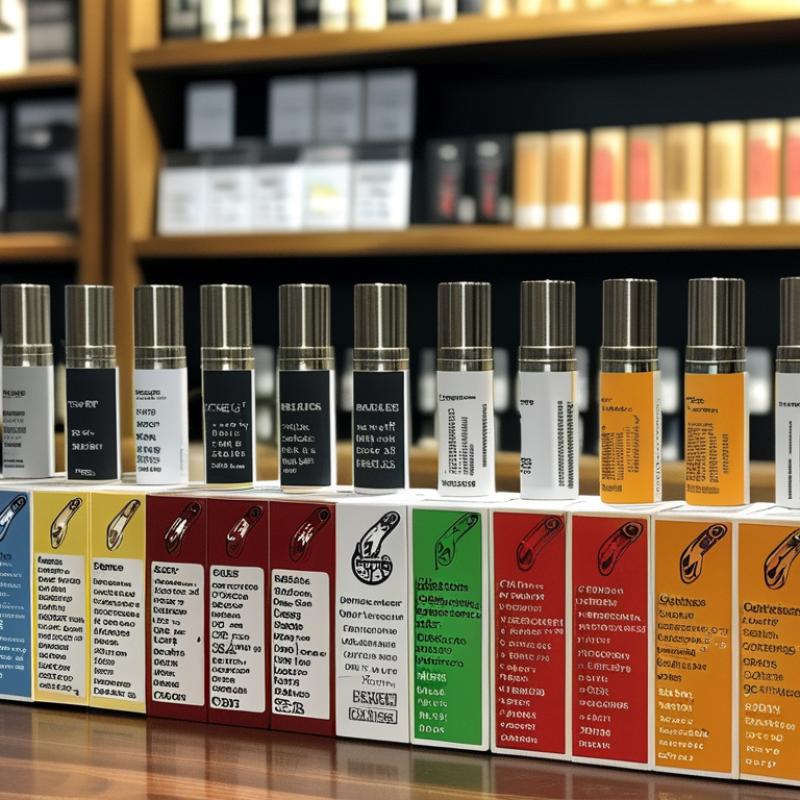
A vape manufacturer is more than a production site. It connects component suppliers, testing laboratories, warehouses, and distributors. Grand View Research valued the global e-cigarette market at approximately USD 28.17 billion in 2023. It also projected a 30.6% annual growth rate from 2024 to 2030. Such growth increases pressure on supply-chain reliability. Distributors need consistent production, documented quality controls, and realistic delivery schedules.
The manufacturer should provide batch records, ingredient specifications, test results, and traceability from incoming materials to finished units. These documents support responsible distribution and jurisdiction-specific compliance. The 2023 Global State of Tobacco Harm Reduction report estimated about 114 million adult vapers worldwide. That scale makes weak forecasting expensive. A shipment may look complete, yet one missing certificate can delay customs clearance or retail placement. Capacity claims also deserve testing. Ask for production evidence, recall procedures, supplier audits, and independent laboratory verification. A polished factory tour is not proof. This is where many evaluations become too optimistic.
Tips: Request a sample compliance file before signing. Check whether batch numbers match invoices and test reports. Confirm age-restricted sales requirements for every destination. Review storage conditions, replacement policies, and communication during delays. A small trial order can reveal more than a confident presentation. Mistakes still happen, but hidden mistakes are the costly ones.
What Should Distributors Look for in a Vape Manufacturer?
A reliable vape manufacturer should provide clear evidence of product quality, safety, and regulatory compliance. Ask for recent laboratory reports covering ingredients, emissions, battery performance, and contamination risks. Reports should match the exact product, batch, and formulation you plan to sell. Generic documents are not enough.
Inspect the production site if possible. Look for controlled storage, clean assembly areas, calibrated equipment, and traceable batch records. A strong manufacturer can explain how defective units are isolated and recalled. Packaging should display accurate ingredients, warnings, batch numbers, and market-specific information. Requirements differ between countries. Never assume one label works everywhere.
Tips: Request third-party test reports. Check laboratory accreditation. Confirm manufacturing dates. Review complaint records. Ask how quickly safety issues are reported. Verify every claim independently. Small details matter.
Regulatory compliance should be continuous, not a one-time certificate. Manufacturers must monitor rule changes, advertising limits, packaging standards, and product notifications in each target market. A polished sample can still hide weak controls. That is a common mistake. Distributors should also test incoming shipments, even when the supplier appears experienced. This extra step costs time, but it can reveal inconsistent airflow, damaged seals, or battery defects before products reach customers. Reliability is demonstrated through records, transparent answers, and consistent performance—not confident promises.
A practical distributor checklist based on internationally recognized quality principles and market-specific regulatory requirements.
| Evaluation Dimension | Distributor Checkpoint | Verified Benchmark or Requirement | Evidence to Request | Priority |
|---|---|---|---|---|
| Nicotine Concentration | Confirm that the labeled nicotine strength matches the actual formulation and laboratory result. | For products placed on the EU market, nicotine-containing liquid must not exceed 20 mg/mL under the Tobacco Products Directive. | Independent laboratory assay, batch specification, certificate of analysis, and retained-sample records. | Required by Market |
| E-Liquid Container Capacity | Verify container size before importing or distributing in regulated markets. | In the EU, refill containers containing nicotine are limited to 10 mL. | Packaging drawings, production specifications, artwork approval records, and volume verification. | EU Requirement |
| Cartridge or Tank Capacity | Check the maximum liquid capacity of disposable cartridges, single-use cartridges, and tanks. | In the EU, nicotine-containing cartridges and tanks are limited to 2 mL. | Technical drawings, dimensional inspection records, and finished-product test reports. | EU Requirement |
| Child-Resistant Packaging | Ensure packaging prevents access by children under reasonably foreseeable use conditions. | Nicotine-containing refill containers in the EU must be child-resistant and tamper-evident; packaging should be tested against the applicable packaging standard and local law. | Packaging test report, conformity declaration, closure specification, and tamper-evidence inspection records. | Safety Critical |
| Product Notification | Confirm that the manufacturer or responsible economic operator has completed the required pre-market notification process. | For applicable EU tobacco and vaping products, notification is generally required at least six months before placing a product on the market. | Regulatory submission confirmation, product dossier, ingredient list, emissions data, and market-specific authorization records. | Market Entry |
| United States Market Authorization | Do not treat manufacturing capability or laboratory testing as proof that a product may legally be sold in the United States. | New tobacco products generally require an applicable premarket authorization before lawful marketing in the United States. | Product-specific regulatory status, marketing authorization documentation, and distribution restrictions. | Market Specific |
| Ingredient Control | Require a controlled ingredient list and prohibit undocumented formulation changes. | Every production batch should be manufactured against an approved formula with documented supplier controls and change management. | Master formula, raw-material specifications, supplier qualification records, allergen or contaminant declarations, and change-control logs. | Required Control |
| Laboratory Testing | Use competent laboratories to verify nicotine content, contaminants, emissions, and product conformity. | Testing should be performed using validated methods by an accredited laboratory where available; ISO/IEC 17025 is the internationally recognized competence standard for testing laboratories. | Laboratory accreditation scope, test methods, raw data, certificates of analysis, and sample-chain records. | Recommended |
| Batch Traceability | Make it possible to trace every finished unit back to materials, production date, equipment, operators, and test results. | Each saleable unit or package should carry a readable batch or lot code linked to manufacturing and distribution records. | Traceability procedure, sample batch record, coding verification, warehouse records, and mock-recall results. | Required Control |
| Quality Management System | Assess whether production is controlled through documented procedures rather than relying only on final inspection. | ISO 9001 certification is a useful quality-system indicator, although certification alone does not prove product safety or regulatory authorization. | Current certificate, certification scope, audit reports, corrective-action records, and key operating procedures. | Recommended |
| Battery and Electrical Safety | Evaluate rechargeable cells, charging systems, protection circuits, overheating controls, and short-circuit protection. | Lithium-ion cells and batteries transported internationally should meet applicable UN 38.3 transport-test requirements; rechargeable cells may also require testing against the applicable IEC 62133-2 standard. | UN 38.3 test summary, battery specifications, protection-circuit test results, charger specifications, and electrical safety reports. | Safety Critical |
| Leakage and Mechanical Integrity | Check whether devices and containers resist leakage, cracking, loose components, and damage during normal distribution. | Products should pass documented internal leakage, drop, vibration, sealing, and functional tests defined in the approved product specification. | Validation protocol, test limits, production inspection records, transport simulation results, and nonconformance reports. | Quality Critical |
| Shelf-Life Validation | Confirm that nicotine strength, liquid appearance, packaging integrity, and device performance remain acceptable throughout the claimed shelf life. | Shelf-life claims should be supported by real-time or scientifically justified accelerated stability data under defined storage conditions. | Stability protocol, time-point results, storage conditions, expiry-date justification, and packaging compatibility study. | Recommended |
| Label and Consumer Information | Review warnings, nicotine statements, ingredients, batch identification, quantity, manufacturer details, and disposal information. | Label content must be adapted to the destination market; EU nicotine products require specific health warnings and safety information under applicable tobacco-product rules. | Regulatory label review, approved artwork, translation verification, packaging samples, and market-specific compliance checklist. | Required by Market |
| Complaint and Recall Capability | Determine whether the manufacturer can investigate incidents and remove affected batches quickly. | A documented complaint, adverse-event, corrective-action, and recall process should identify affected lots and support prompt market withdrawal. | Recall procedure, complaint log, escalation matrix, corrective-action reports, customer-notification template, and mock-recall results. | Required Control |
| Supplier and Manufacturing Transparency | Confirm the location and scope of manufacturing, critical subcontractors, and controls over raw materials and components. | The manufacturer should disclose critical suppliers and notify distributors before changes to formulation, components, manufacturing site, or process. | Supplier list, approved-vendor procedure, audit reports, subcontractor agreements, and formal change-notification policy. | Recommended |
A vape manufacturer should prove production capacity, not merely describe it. Ask for monthly output, available shifts, equipment count, and recent utilization rates. Capacity matters. A factory producing at full load may struggle with urgent orders or quality checks. Review batch records, defect rates, and average lead times. These details reveal whether growth is genuinely supported by people and machinery.
Technology deserves the same scrutiny. Look for automated filling, controlled assembly, digital process monitoring, and stable battery testing systems. Request calibration records and independent laboratory reports for applicable products. Traceability should connect each finished unit to materials, operators, and inspection results. During a facility visit, observe line cleanliness, inventory labeling, and how rejected units are isolated. Small observations can expose larger process weaknesses.
Customization is valuable when it remains practical. Discuss airflow design, materials, packaging, firmware limits, and available form factors. Confirm minimum order quantities, prototype costs, tooling ownership, and revision timelines before signing an agreement. A reliable manufacturer should explain what can be changed without weakening safety or consistency. Do not accept attractive samples as proof of mass-production readiness. Samples are easy. Repeatable production is harder. One common mistake is focusing on appearance while overlooking documentation and after-sales support. That gap matters. Ask how complaints are investigated, how corrective actions are recorded, and how regulatory requirements are monitored in each intended market. No factory is perfect, but transparent answers indicate operational maturity.
A distributor should assess the full landed cost, not only the quoted unit price. Ask for a clear breakdown of device costs, packaging, testing, freight, duties, and payment terms. A low price can still be expensive. Unexpected tooling fees or rushed shipping can damage margins quickly. Compare at least three written quotations using the same specifications and delivery terms.
Minimum order quantities require practical judgment. A large order may reduce the unit price, but it can trap cash in slow-moving inventory. Review sales forecasts, product shelf life, storage capacity, and replacement policies before committing. Ask whether mixed models or staged shipments are possible. Smaller trial orders provide useful evidence, although they may carry higher pricing. That trade-off deserves careful calculation.
Supply chain reliability is more than a promised ship date. Request production lead times, quality-control records, batch traceability, inspection procedures, and documented corrective actions. Verify whether critical components have approved alternatives. Ask how the manufacturer handles shortages, failed inspections, damaged cartons, or sudden capacity limits. Communication matters too. A supplier that reports delays early is easier to manage than one that stays silent. During a factory review, sample records and actual warehouse practices may not perfectly match. That gap should be investigated, not ignored. Keep written agreements covering specifications, acceptance standards, delivery windows, and remedies for nonconforming goods. Regular performance reviews can reveal repeated delays before they become inventory problems.
A distributor should test customer support before signing a supply agreement. Ask technical questions about devices, packaging, batch records, and warranty handling. Measure the response time. Clear answers matter more than polished promises.
The World Health Organization reports that more than 100 million people use electronic nicotine products worldwide. That scale increases the need for reliable documentation. Request ingredient disclosures, laboratory test results, safety files, and current compliance certificates. Check whether documents match product batches and destination-market requirements. Keep written records of every revision. Small inconsistencies can become expensive delays.
Partnership potential is harder to measure. Begin with a limited order and review delivery accuracy, defect rates, and complaint handling. Ask how the manufacturer manages recalls, training, and inventory changes. The Global State of Tobacco Harm Reduction estimated about 114 million vapers globally in 2024, showing why scalable support matters. Yet market figures vary by methodology. Treat forecasts carefully. No checklist is perfect. A capable manufacturer should accept questions, admit limitations, and improve its process when evidence exposes a gap.
Use this practical due-diligence framework to compare manufacturers without relying only on product pricing. The criteria focus on customer support, documentation quality, and long-term partnership potential.
Ask for monthly output, shift schedules, equipment counts, and recent utilization rates. A factory running at full capacity may struggle with urgent orders. Review batch records, defect rates, and average lead times. Numbers reveal more than confident promises.
Look for automated filling, controlled assembly, digital monitoring, and stable battery testing. Request calibration records and relevant laboratory reports. During a visit, inspect clean lines, labeled inventory, and isolated rejected units. Small details can expose larger weaknesses.
Discuss airflow, materials, packaging, firmware limits, and available shapes. Confirm minimum orders, prototype costs, tooling ownership, and revision timelines. Ask which changes might reduce safety or consistency. A beautiful sample proves very little.
Samples are usually prepared under controlled conditions. Mass production must repeat the same results across many batches. Review traceability, inspection records, and defect handling before committing. Appearance can distract me. That is a risk.
Request device costs, packaging, testing, freight, duties, tooling, and payment terms. Compare at least three written quotations using identical specifications. A low unit price may hide expensive shipping or unexpected fees. Cheap can become costly.
Compare order size with sales forecasts, storage space, product shelf life, and cash flow. Ask whether mixed models or staged deliveries are available. A smaller trial order may cost more per unit. That trade-off may still reduce inventory risk.
Request lead times, quality records, batch traceability, inspection procedures, and corrective actions. Ask whether critical components have approved alternatives. Discuss shortages, failed inspections, damaged cartons, and capacity limits. Silence during delays is a warning.
Put specifications, acceptance standards, delivery windows, and remedies in writing. Ask how complaints are investigated and corrective actions are documented. Confirm how regulatory requirements are monitored in each intended market. No factory is perfect. Transparent answers still matter.
Choosing the right supplier is essential for distributors seeking stable growth and long-term cooperation. The question “what should distributors look for in a vape manufacturer” should begin with a clear understanding of the manufacturer’s role in the supply chain, including product development, quality control, packaging, delivery, and regulatory documentation. Distributors should carefully evaluate product consistency, material safety, testing procedures, labeling accuracy, and compliance with applicable laws in their target markets.
A reliable manufacturer should also demonstrate sufficient production capacity, modern technology, flexible customization options, and dependable quality management. Transparent pricing, reasonable minimum order quantities, predictable lead times, and resilient logistics are equally important for reducing supply risks. Finally, distributors should assess customer support, documentation, communication, after-sales service, and the manufacturer’s willingness to build a professional partnership. A supplier that combines safety, compliance, operational reliability, and responsive service can help distributors maintain customer trust and manage their business more effectively.

Kizz Vape